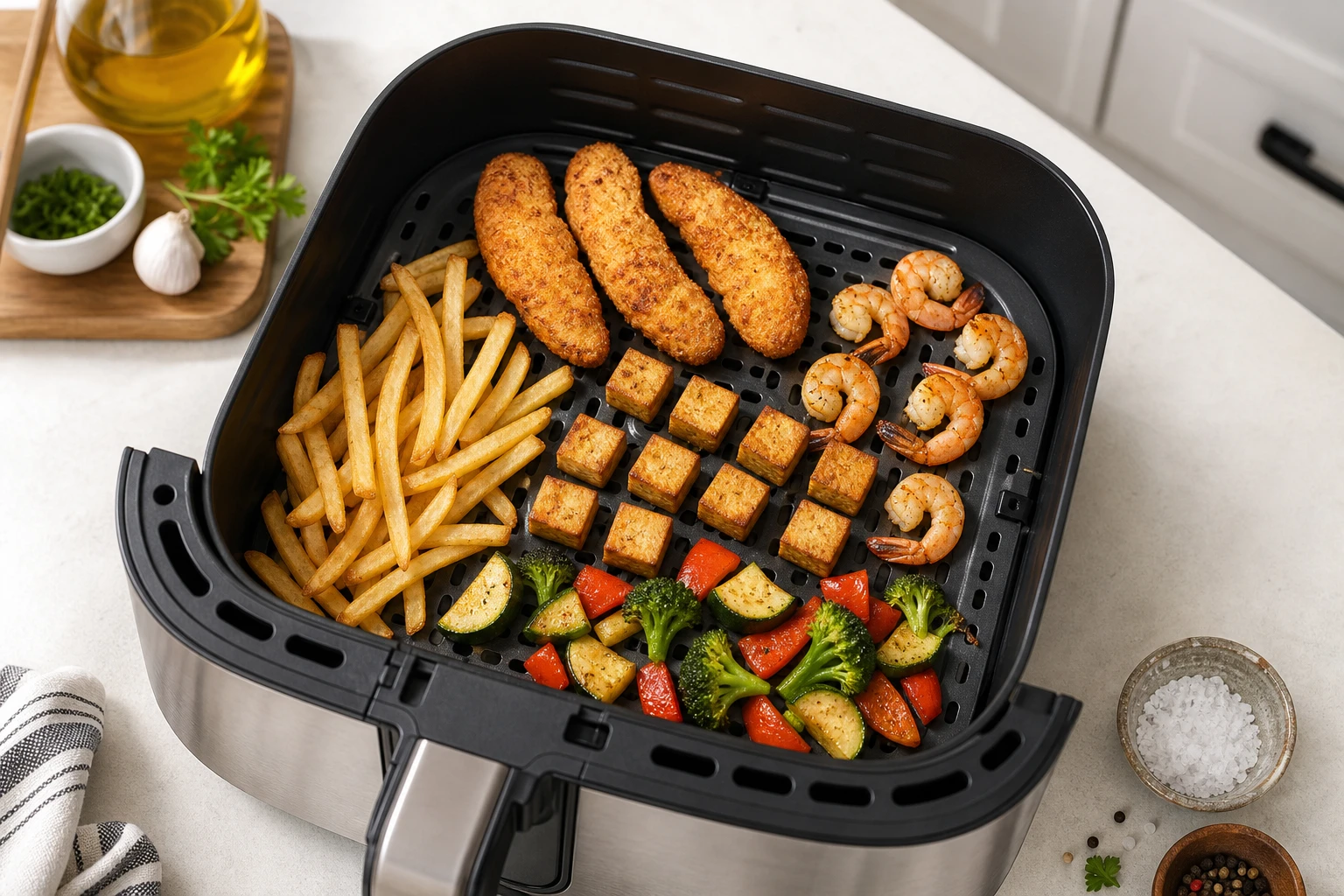
Crispy air fryer food starts with airflow. If the basket is packed too tightly, hot air cannot move around the food well, so fries soften, breading turns patchy, and vegetables steam instead of brown.
Save these basket loading rules when you need a quick reminder before dinner, snacks, or batch cooking.
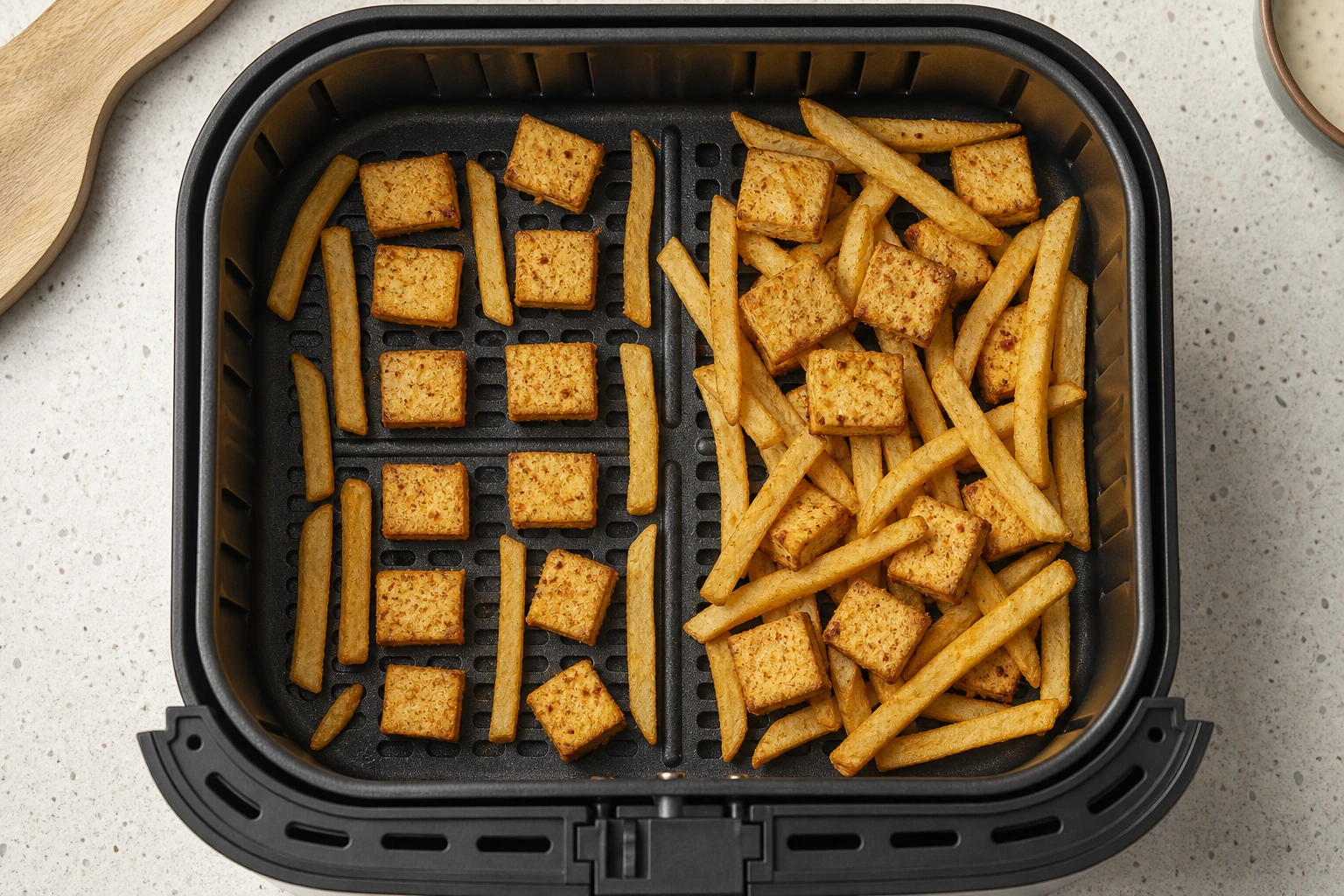
Air Fryer Basket Loading Chart
Use this chart as a fast starting point. Exact capacity still depends on your basket size, food thickness, and whether the food releases moisture.
| Food type | How full the basket should be | Shake or flip guidance | Crispiness note |
|---|---|---|---|
| Fries and potato wedges | About 1/2 full, with loose space between pieces | Shake well once or twice during cooking | Overfilling traps steam and softens the edges |
| Chicken tenders | Single layer or very slight overlap only | Flip halfway through | Crowding makes breading pale instead of crisp |
| Chicken thighs or drumsticks | Single layer with space around each piece | Flip once if skin-side browning looks uneven | Packed chicken releases moisture, so extra space matters |
| Meatballs | About 1/2 to 2/3 full if they are small and evenly sized | Shake gently or roll halfway through | Too many meatballs in one load brown less evenly |
| Shrimp | Single layer or light overlap for smaller shrimp | Shake or flip once | Shrimp cook fast and lose crispness when piled deep |
| Fish fillets | Single layer only | Flip carefully if the coating allows it | Fillets are most likely to break and steam when crowded |
| Vegetables | About 1/2 full for watery vegetables, up to 2/3 for firmer vegetables | Shake at least once | Zucchini, peppers, and mushrooms need more room than denser vegetables |
| Frozen snacks | About 1/2 full, spread out evenly | Shake once or twice depending on size | Frozen coatings crisp best when hot air reaches all sides |
| Tofu | Single layer or slight overlap after drying well | Shake or turn halfway through | Damp tofu needs room or it stays chewy instead of crisp |
| Desserts and baked items | Follow the pan or liner size, but keep space around the container | Usually no shake; rotate only if needed | Batter-based items need airflow around the baking dish, not direct piling |
Single Layer vs Slight Overlap
Single layer is best when you want maximum browning. Breaded food, fish fillets, tofu cubes, fries, and watery vegetables all crisp better when hot air can reach every surface.
Slight overlap can work for smaller foods that move easily during a shake, such as fries, tater tots, meatballs, or small shrimp. The basket should still look loose rather than packed. If pieces are resting in a heavy mound, you have gone too far.
When You Can Stack Food
You can stack food only when the pieces are sturdy, similar in size, and easy to move partway through cooking. Fries, frozen snacks, small meatballs, and some vegetables can handle a shallow pile if you shake them well.
Stacking works better when the goal is speed and convenience instead of the absolute crispiest finish. If you want deep browning, lighter crisp edges, or evenly set breading, keep to one layer.
When You Should Cook in Batches
Cook in batches when food is breaded, delicate, wet, skin-on, or bulky. Fish fillets, chicken tenders, chicken thighs, tofu, and large vegetable pieces usually reward the extra batch with better color and texture.
Batch cooking is also the better call when you are making a Pinterest-style platter and want every piece to look evenly crisp rather than half steamed.
Quick Rules for Crispier Food
- Preheat when you want the coating or edges to set fast.
- Pat wet ingredients dry before they go into the basket.
- Use single-layer spacing for breaded food, fish, tofu, and watery vegetables.
- Shake small foods and flip larger foods halfway through.
- Do not line the basket so heavily that airflow underneath disappears.
- Pull food as soon as it is done instead of letting it sit and steam in the hot basket.
Save These Basket Loading Rules
- Half full is usually safer than packed full.
- Single layer wins when crispiness matters most.
- Slight overlap is fine only when the food can be moved easily.
- Batch cooking beats soggy food every time.
Related Air Fryer Recipes and Guides
Use these pages when you want basket-loading examples for different food types, broader category browsing, or more practical air fryer help:
- Chicken Air Fryer Ideas
- Seafood Air Fryer Ideas
- Air Fryer Snacks
- Air Fryer Sides
- Vegetarian Air Fryer Recipes
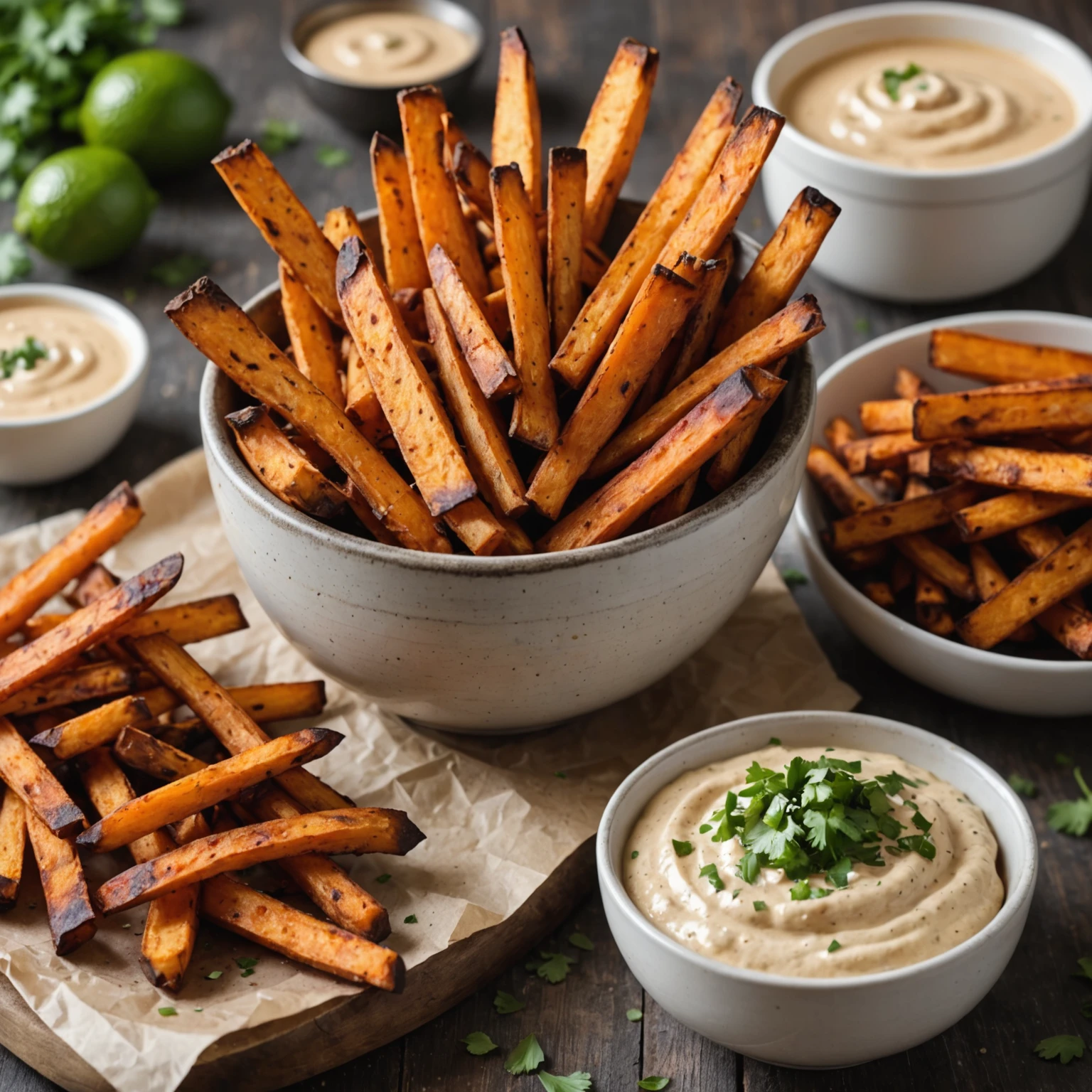
- Air Fryer Sweet Potato Fries with Smoky Chipotle Mayo
- Air Fryer Cheesy Cauliflower Tots
- Air Fryer Thai-Inspired Crispy Tofu Lettuce Wraps
- All Air Fryer Articles
FAQ
Can you stack food in an air fryer?
Yes, but only lightly and only for foods that can be shaken or turned easily. For the best crisp texture, a single layer is still the safer choice.
How full is too full?
If the food looks tightly packed, sits in a deep mound, or has very few open gaps for airflow, the basket is too full. That is when steaming starts to replace browning.
Why is my food soggy?
Soggy air fryer food is usually caused by overcrowding, excess surface moisture, or leaving finished food in the basket too long after cooking. All three trap steam against the coating.
Do I need to shake the basket?
Shake smaller foods such as fries, frozen snacks, tofu cubes, shrimp, and vegetables. Flip larger foods such as tenders, thighs, drumsticks, or fillets when one side needs more color.
Should food touch?
A little contact is fine for sturdy foods like fries or meatballs, but heavy overlap reduces airflow. If crispiness is your main goal, give each piece visible space.
Is parchment safe?
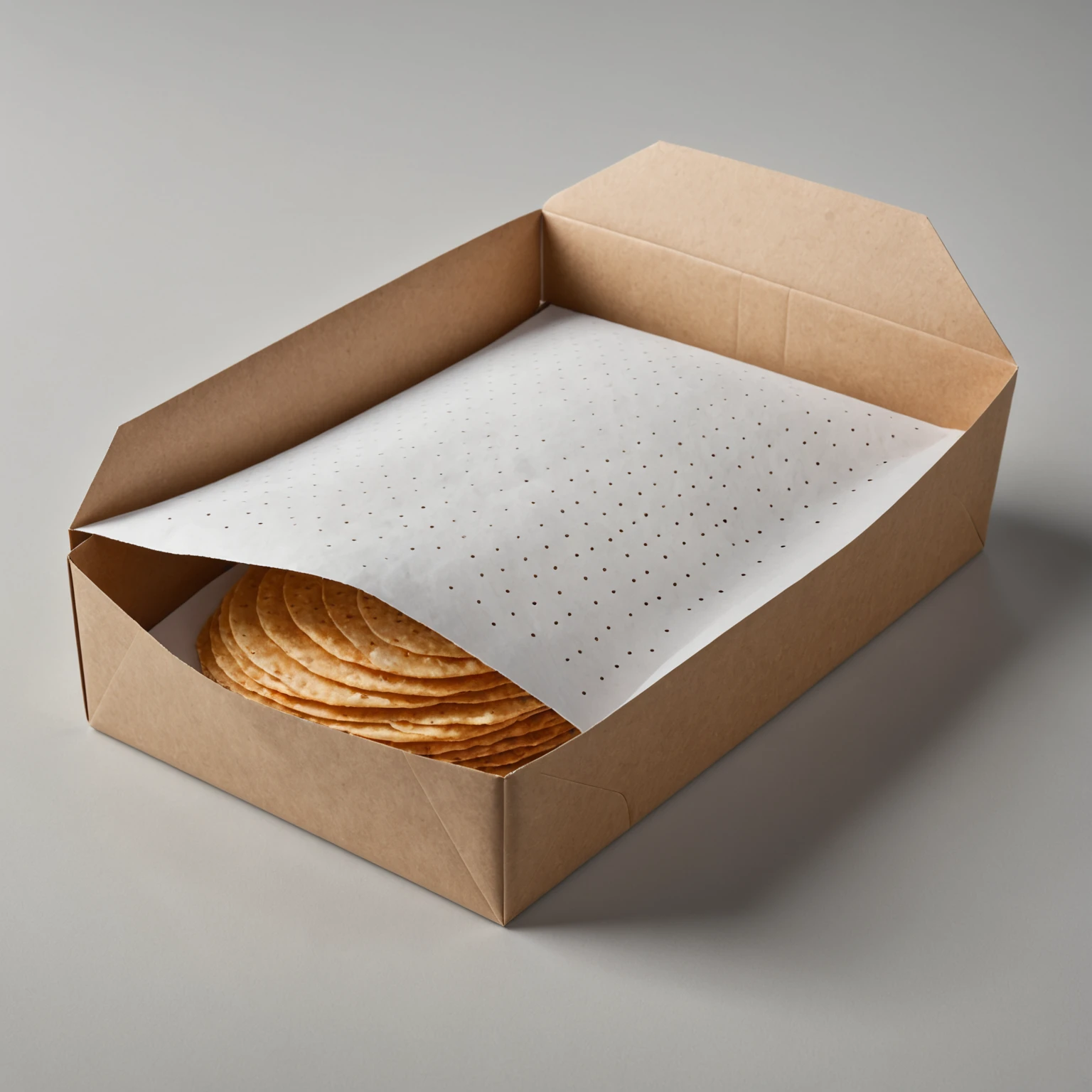
Yes, air fryer parchment can be safe when it is weighted down by food and sized correctly for the basket. Do not let loose parchment fly into the heating element, and do not cover so much of the basket that airflow is blocked.
Is one layer always necessary?
Not always. One layer is the best default for crisp food, but slight overlap can still work for small foods that you shake well during cooking.
Browse More Practical Air Fryer Help
Keep this chart bookmarked for quick basket-loading decisions, then explore Chicken air fryer ideas, Seafood air fryer ideas, Air Fryer Sides, and All Air Fryer Articles.